Extending emergency supports and initiatives to get businesses hiring post COVID-19 will be among the key highlights of the federal budget on Monday.
Finance Minister Chrystia Freeland will present the document in the House of Commons, more than two years after the Liberals’ last such spending plan was unveiled.
While the Liberals have portrayed the budget as their vision for shaping Canada’s economy for a post-pandemic world, they are also facing pressure to better support people and businesses now struggling with the third wave of COVID-19.
Sources confirm to CityNews Parliament Hill reporter Cormac Mac Sweeney that a national child care plan will be the centerpiece of the budget. While the plan still requires additional work with the provinces, the expectation is it could be up and running within two years.
With much of the country suffering through a third wave of COVID-19, the Trudeau government is expected to extend main emergency supports until the fall while also introducing a new hiring program that will incentivize businesses to hire as the economy emerges from the ravages of the pandemic.
There will also be programs targeting supports for marginalized Canadians, women and young people who have been hardest hit with job losses throughout the pandemic.
According to a report from Reuters, the budget will also include a sales tax for online platforms and e-commerce warehouses, a digital services tax for Web giants, and a tax on vacant residential property owned by non-resident, non-Canadian owners. While there is also expected to be a luxury tax on items such as new cars, private aircraft and yachts, the budget is not expected to include a so-called wealth tax.
The one thing the budget will not do is provide a date for when the federal books will be back in the black. The deficit is expected to come in around $400 billion after the fall economic statement pegged it at $381.6 billion.
Opposition parties have spent the past few weeks laying out their demands and will be watching to see whether the government has responded before deciding whether to support the budget or not.
The Liberals need at least one party to support the budget to prevent a snap election, which opinion polls suggest most Canadians do not want at the moment.
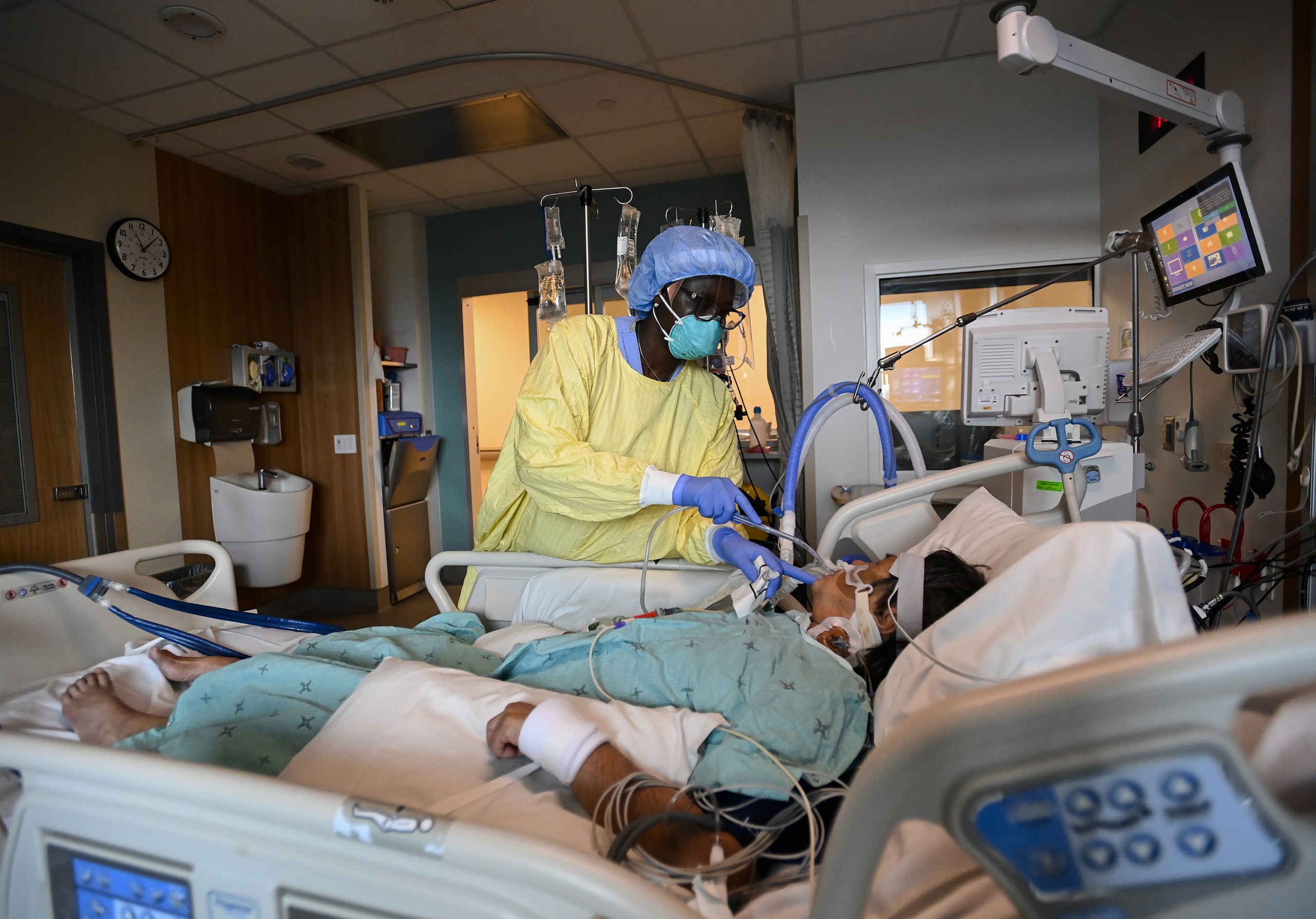
The federal government announced it was mobilizing its own resources and co-ordinating with lesser-hit provinces to send health-care workers and other support to help Ontario as it battles record-breaking COVID-19 numbers.
Intergovernmental Affairs Minister Dominic LeBlanc told a news conference that the federal government will co-ordinate and cover all the cost of relocating health-care workers who are sent to help from other provinces, including by using military aircraft.
Some Atlantic provinces are expected to provide estimates of the number of personnel they can send in the next day or two, he said, adding the federal government is also drawing up lists of available staff that could be deployed from departments such as national defence and immigration.
LeBlanc held a media availability along with Defence Minister Harjit Sajjan, Health Minister Patty Hajdu, and Public Safety Minister Bill Blair to announce emergency aid for the hard-hit province.
Leblanc told The Canadian Press in an interview that the federal government decided to take a “leadership role” after Ontario reached out to other provinces and territories for assistance.
Ottawa has offered to cover the costs of health-care personnel deployed from elsewhere to help in Ontario, Leblanc said.
“Newfoundland is hoping by tomorrow or Tuesday to have a clear picture of the first tranche,” Leblanc said. “The same thing is true with the other Atlantic provinces.”
Trudeau said in a video update earlier Sunday that health workers employed by federal government departments would be redeployed to Ontario, and the Greater Toronto Area in particular. The timeline for any such deployment was unclear.
There was no immediate word on whether the Ford government would accept Ottawa’s offer but a spokeswoman for Ontario’s health minister says the government is grateful for the federal show of support during the COVID-19 pandemic.
“We will continue to work with all levels of government and health care partners to protect the health and safety of Ontarians and combat this deadly virus.”
Two days earlier, Premier Doug Ford issued a nationwide appeal for support for Ontario’s strained hospitals and other health-care resources.
Ford’s office did not respond to a request for comment on Sunday.
LeBlanc said both he and Trudeau had spoken with several premiers across the country who expressed concern about the situation in Ontario and voiced an interest in helping.
“I think at a moment like this, the whole country says to itself, ‘What can we do to help the people of Ontario?” Leblanc said.
He added that Dr. Allison Furey, the wife of Newfoundland and Labrador’s premier, would be part of the Atlantic contingent heading to Ontario.
Speaking earlier in the video he posted to social media, Trudeau said he had discussed Ontario’s plight with the premiers of Newfoundland and Labrador, Prince Edward Island and Nova Scotia.
“They are working hard to determine what human resources and equipment they could free up over the coming days,” he said.
He said the federal government will also work with Ontario cities to deploy rapid tests to hard-hit locations.
Meanwhile, data released by Canada’s chief public health officer shows that the average daily number of hospitalizations and deaths in the country jumped by more than 30 per cent between April 9 and 15 compared to the week before.
The latest national-level data found that an average of 3,428 people with COVID-19 were being treated in Canadian hospitals each day during the most recent seven-day reporting period, representing a 34 per cent increase over the week before.
An average of 41 people died each day during the same period, which is 38 per cent higher than the previous week.
Dr. Theresa Tam said cases, test positivity rates and intensive care admissions are all rising as Canada battles a wave of COVID-19 that is driven by more contagious variants.
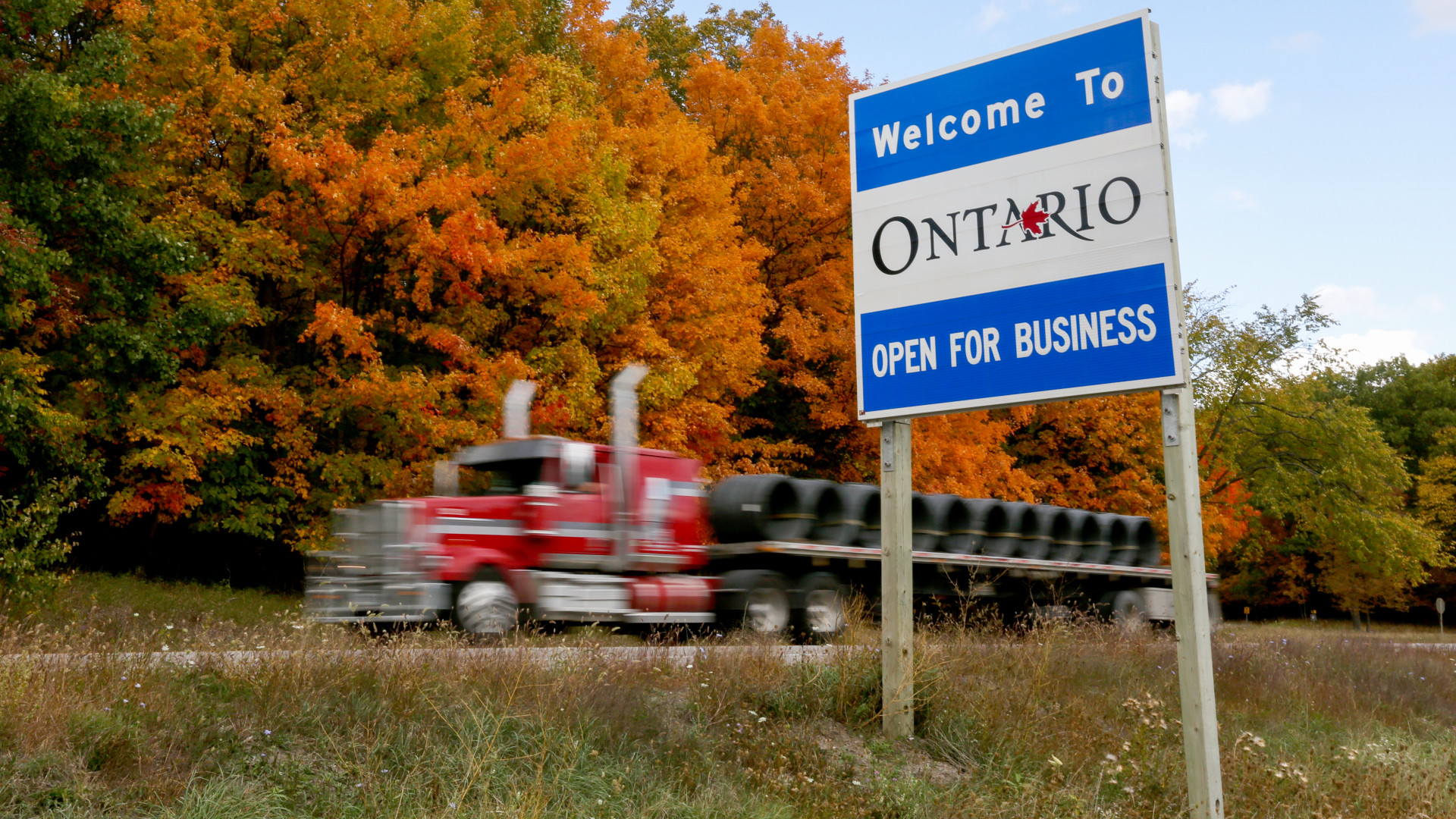
Ottawa police say they plan to start enforcing restrictions on interprovincial travel at the Ontario-Quebec border on Monday but for the time being, there are no plans to issue fines to anyone trying to enter the province.
As part of the Ford government’s enhanced stay-at-home measures announced Friday, non-essential travel into Ontario from Manitoba and Quebec is restricted and a person may be stopped by police who may ask questions as to their purpose for coming into the province.
Ottawa police say they will have checkpoints set up on a 24-7 basis on the Ontario side of the Champlain, Portage, Chaudière and Macdonald-Cartier bridges, as well as the Quyon and Bourbonnais ferries.
Police will also have a presence at the Alexandra Bridge, as the provincial order also applies to pedestrians and cyclists.
Insp. Michel Marin of the Ottawa Police Service tells CityNews Ottawa there are no plans to issue fines to drivers, cyclists or pedestrians trying to enter the province.
“We’re trying to plan this in a way that [the interaction at the border] is going to be a short conversation,” he said. “If we’re asking them to turn around for whatever reason, we’ll be keeping tabs on that.”
Police say individuals will not have to show any special documentation beyond that to operate a vehicle, however, they will be required to provide their name, address and reason for travelling.
As for repeat offenders who continue to try and cross the border, police say they are still working out those details.
“We’re also going to find out from other agencies who have done this in the past — if they’ve had any of those types of issues,” Marin explained. “But I don’t see ourselves going into a position where we’re going to be providing fines to people who are constantly trying to come into the province with good reason.”
Permitted reasons to cross into the province under the new restrictions include, but are not limited to, being an essential worker, travelling for medical care, transportation of goods or to Indigenous Treaty rights
Marin stressed that their approach is limited to the Ottawa Police Service, and that the OPP and RCMP will not be assisting but instead will have their own plans when it comes to their jurisdictions.
Ontario Provincial Police will have checkpoints set up along the Ontario-Quebec border in eastern Ontario and those not travelling for essential reasons will be refused entry in Ontario.
OPP officials say with very few exceptions they will be stopping incoming passenger vehicles with out-of-province plates to determine their reason for crossing the border.
Officials say commercial vehicles, such as transport trucks, will be permitted to pass without entering border checkpoints. And while vehicles bearing Ontario license plates will be required to enter the checkpoint, they will also be allowed to proceed.
Similar checkpoints will also be set up along the Ontario-Manitoba border.

Ontario will start offering the Oxford-AstraZeneca vaccine to those aged 40 and over starting on Tuesday, the province announced Sunday following days of mounting pressure to lower the minimum age.
WATCH: https://toronto.citynews.ca/2021/04/18/ontario-lowers-minimum-age-for-astrazeneca-shot-to-40-from-55/
The province had previously stuck to the National Advisory Committee on Immunization’s recommendation to only offer the AstraZeneca shot to those 55 and over due to a slightly elevated risk of an extremely rare blood clot disorder.
But as hospitalizations surged to unprecedented levels in Ontario and AstraZeneca vaccines sat in pharmacy refrigerators, Health Minister Christine Elliott’s office confirmed the plan to make the shots available to more residents.
“Based on current supply, Ontario will begin offering the AstraZeneca COVID-19 vaccine to individuals aged 40 and over at pharmacy and primary care settings across the province effective Tuesday,” Alexandra Hilkene said in an email on Sunday evening.
Hours earlier, Elliott’s federal counterpart told a news conference that there is nothing stopping the province of Ontario – or any province for that matter – from changing its age guidelines for the vaccine.
“NACI provides advice to provinces and territories,” Health Minister Patty Hajdu said. “They can adjust their use for AstraZeneca as per their desire and the advice from their own public health authorities and medical expertise.”
She noted that Health Canada has licensed the AstraZeneca shot for use in people over the age of 18.
“NACI continues to review the advice on AstraZeneca use and will have updated guidance in the very near future,” Hajdu added.
Anthony Dale, president and CEO of the Ontario Hospital Association, tweeted that there is “’surplus supply at risk of expiring.”
The head of the Ontario Pharmacists Association said that most of the AstraZeneca doses in Ontario don’t expire until the end of May, but that a timer starts ticking as soon as a vial – which contains 10 doses – is punctured to retrieve the first shot.
“Once a vial is punctured it is only viable for up to 48 hours when stored in a fridge or six hours when not in the fridge,” Justin Bates said.
He said vaccine hesitancy around the AstraZeneca shot has led to last-minute appointment cancellations that mean some of those doses could go to waste – something pharmacists are working hard to avoid.
Many Ontario physicians took to social media to express their frustration with the province’s lack of action on the issue ahead of Sunday’s announcement.
“Pharmacies, listen up. DO NOT WASTE A SINGLE DOSE OF THE AZ VACCINE. Explain the risk and obtain informed consent to administer to people under age 55,” Dr. Brian Goldman said in a tweet Sunday.
Dr. Irfan Dhalla, vice-president of Unity Health Toronto, agreed.
“It’s hard to imagine the provincial government coming after pharmacies or family doctors for using AZ in people (under) 55,” he tweeted.
Later, he praised Elliott’s decision to unlock some of the AstraZeneca vaccines, and urged the province to send even more to COVID-19 hot spots.
Steven Del Duca, who heads up the Liberal party in the province, agreed.
“Doug Ford must release the AstraZeneca vaccine from pharmacy freezers and get it into the arms of anyone over 18 in a hot spot,” he tweeted Sunday. “(Patty Hajdu) was clear: there is nothing stopping him from getting shots into arms.”
The calls to lower the threshold for the AstraZeneca vaccine extended beyond Ontario’s borders.
“It sounds like Alberta is having trouble using its AstraZeneca. Lower the minimum age; Gen X can help!” Lisa Young, a political science professor at the University of Calgary, tweeted this week.
An Alberta government spokeswoman said Sunday that the province’s chief medical officer was working with NACI to decide whether to expand eligibility for the shot, but that they have yet to come up with a decision.
Some have been hesitant to accept the AstraZeneca vaccine due to a very rare blood clotting condition, which has thus far affected two Canadians.
More than 700,000 doses of the AstraZeneca vaccine have been administered in this country.
The global frequency of the blood clot disorder, known as vaccine-induced immune thrombotic thrombocytopenia, or VITT, has been estimated at about one case in 100,000 to 250,000 doses.
The risk of developing blood clots due to COVID-19 is much higher, and experts say people should accept the first vaccine they’re offered.

The government House leader has asked the Speaker of the House of Commons to investigate a photo leak of a Liberal MP caught naked on camera during a virtual sitting of Parliament.
Pablo Rodriguez said Thursday the incident involving Quebec MP William Amos was “mean-spirited” and has been “life-changing” for him.
He suggested there could be serious implications for the person who took and shared this intimate image on Wednesday.
“Taking a photo of someone who is changing clothes and in the nude and sharing it without their consent could very well be criminal,” Rodriguez said.
A screenshot shows Amos standing unclothed behind a desk between the Quebec and Canadian flags with what appears to be a phone covering his private parts.
During virtual House of Commons sittings, only those who speak are shown on the public feed. Therefore, Amos’s fellow MPs could see him on camera but he did not appear on the main screen.
Bloc Quebecois MP Claude DeBellefeuille, the party whip, raised the incident in a point of order after question period Wednesday, as she called for parliamentary decorum.
“It may be necessary to remind the members, especially the male ones, that a tie and jacket are obligatory, but so are a shirt, boxer shorts or pants,” DeBellefeuille said in French.
“We have seen that the member is in great physical shape, but I think members should be reminded to be careful and control the camera well.”
In a statement Wednesday, Amos said he had returned from a jog and was changing into his work clothes, and did not realize his camera was on.
“This was an unfortunate error,” said Amos, parliamentary secretary to Industry Minister Francois-Philippe Champagne.
“I sincerely apologize to my colleagues in the House of Commons for this unintentional distraction. Obviously, it was an honest mistake and it won’t happen again.”
Thursday morning, Rodriguez opened the House of Commons by blasting the unidentified person who leaked the nude photo of Amos to media, asking if they had given any thought to the ramifications on Amos’s personal life when they shared it.
He called it a case of “callous disrespect.”
“Did they think of (Amos’s) family, children, friends and the fact that the internet is forever? Are we really at the point in our politics that it is acceptable to try and destroy the reputation and humiliate a colleague because someone finds an unfortunate error and unintentional mistake to be funny?” Rodriguez said.
“Our politics have taken a very dark and destructive turn if this is the case.”
Neither MPs nor staff are allowed to to take photos in the House of Commons when it is sitting – a rule that has been extended to include virtual sittings.
This includes taking screenshots of the public and non-public video feeds, Speaker Anthony Rota ruled in September 2020.
“For taking screenshots, it is the same as being in the House. If a member takes a picture, they are taking a picture, and posting it just adds to that. Members are not permitted to take photos in the House,” Rota said in an exchange on Sept. 29.
Rodriguez has asked Rota to launch an immediate investigation to determine who took the controversial photo so the House of Commons could then decide on a next course of action.
Rota said he would take the matter under advisement.
In another statement posted to Facebook on Thursday, Amos thanked people who “sent messages of moral support and encouragement in the aftermath of this most regrettable situation.”
He described the past day as having been difficult, both personally and professionally.
“It is most unfortunate that someone shared, without my consent, a photo in which I was changing my clothes,” he said, adding that he expects the Speaker to investigate.
Procurement Minister Anita Anand also expressed concern over the shared image.
Amos was scheduled to appear at an announcement with Anand Thursday morning, but she said he is instead “taking a day” and noted that he has apologized for the incident as an accident.
“I do, as a member of Parliament, have concerns that we should all, as members of Parliament, be respecting the rules of the House of Commons as well as any additional applicable law,” Anand said when asked about the incident.
Amos was described by Liberal government whip Mark Holland as an “upstanding member of the House” who made an honest mistake.
“His screen was on while in the middle of getting dressed. It could have happened to any of us,” Holland said in a statement.
“We must know who is responsible for leaking non-consensual images from a private video feed. We must also be assured that the video taken by this person is deleted so that further violations of privacy and decency are not possible.”
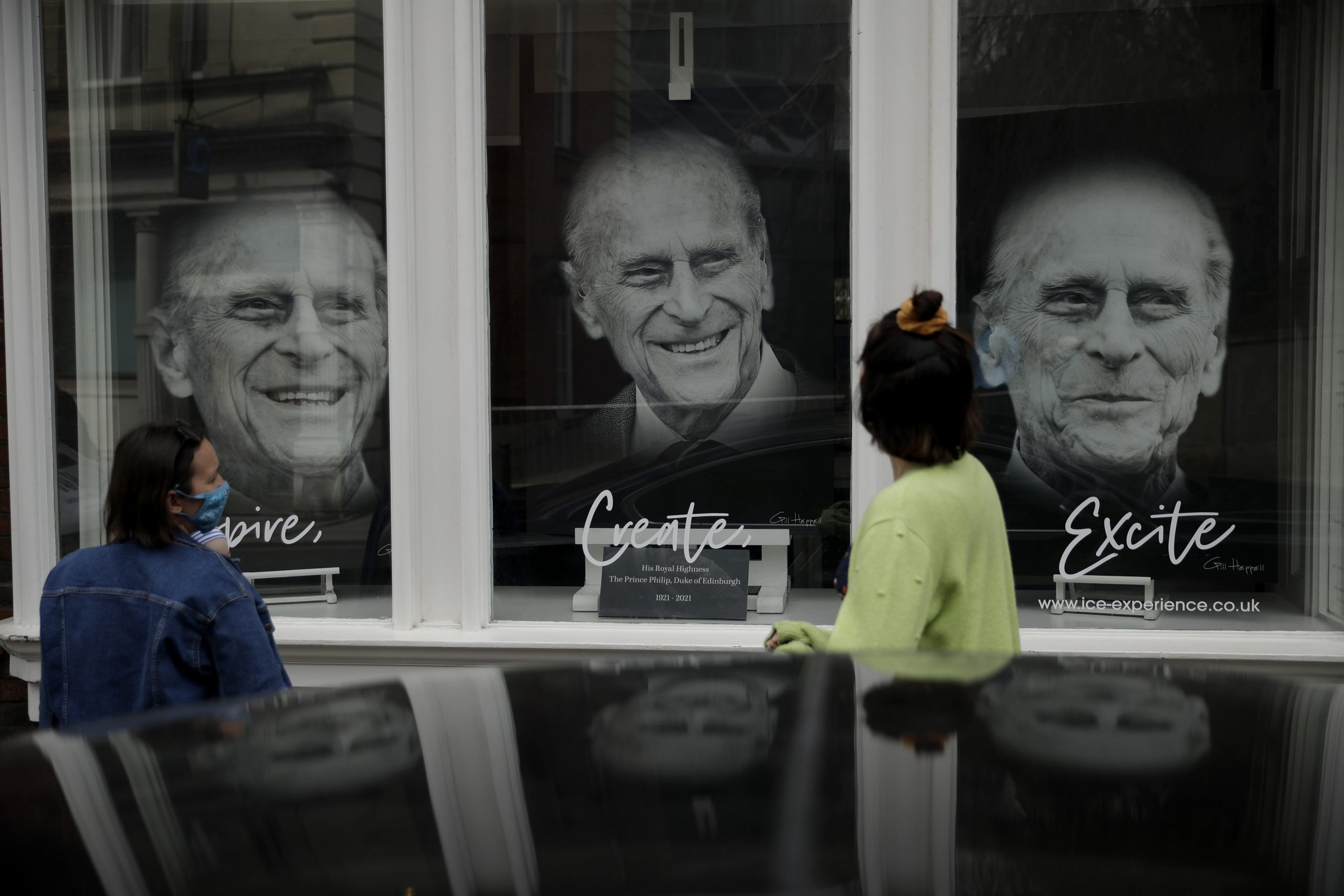
Prince William and Prince Harry won’t walk side-by-side Saturday as they follow their grandfather’s coffin into the church ahead of Prince Philip’s funeral, minimizing the chances of any awkward moments between the brothers who are grappling with strained relations since Harry’s decision to step away from royal duties last year.
Buckingham Palace on Thursday released the broad outlines of the funeral program for Queen Elizabeth II’s husband, who died April 9 at 99. The palace revealed that William and Harry’s cousin, Peter Phillips, will walk between the princes as they escort the coffin to St. George’s Chapel at Windsor Castle, west of London.
Prince Charles, the heir to the throne and the father of the princes, together with his sister, Princess Anne, will lead the 15-member procession.
The brothers had been closely watched as Saturday’s funeral will almost certainly remind the pair of their shared grief at another royal funeral more than two decades ago. As young boys, both walked behind their mother Princess Diana’s coffin in 1997 in London in a ceremony watched around the world.
Palace officials refused to comment when asked whether the positioning of William and Harry was an effort to minimize family tensions, which have grown after Harry and his wife Meghan, the Duchess of Sussex, gave an explosive interview to Oprah Winfrey that suggested an unnamed member of the royal family had made a racist comment to Harry before the birth of their child Archie.
Meghan, who is pregnant and living in California with Harry, is not coming to the funeral on the advice of her doctor.
“We’re not going to be drawn into those perceptions of drama or anything like that,” a palace spokesman said while speaking on condition of anonymity in line with policy. “This is a funeral and the arrangements have been agreed and they represent Her Majesty’s wishes.”
In another effort to preserve family unity, the palace said senior royals would wear civilian clothes to the funeral. The decision, signed off by the queen, means that Harry won’t risk being the only member of the royal family not in uniform during the funeral.
Members of the royal family often wear uniforms to public events by virtue of their honorary roles with the British Army, Royal Navy and Royal Air Force, but Harry lost his honorary military titles when he decided to give up frontline royal duties last year. As a result, protocol suggests that Harry, an army veteran who served two tours of duty in Afghanistan, would only wear a suit with medals at royal functions.
The decision also sidesteps another potential controversy after reports that Prince Andrew, the queen’s second-oldest son, considered wearing an admiral’s uniform to his father’s funeral. Andrew retains his military titles even though he was forced to step away from royal duties after a disastrous interview with the BBC about his acquaintance with convicted sex offender Jeffrey Epstein.
Attendance at the funeral will be limited to 30 people because of the coronavirus restrictions in England. The list will include several of Philip’s relatives from Germany, together with immediate members of the royal family. The children in the family will not attend.
Guests will wear masks inside the chapel and observe social distancing. The queen, always the first to set an example, will also wear a mask.
In other details released about the funeral, Royal Marine buglers will play “Action Stations,” an alarm that alerts sailors to prepare for battle.
Philip, also known as the Duke of Edinburgh, served in the Royal Navy for 12 years and maintained close ties to the armed forces throughout his life. Military personnel will have a large role in honouring him Saturday despite the attendance limit.
Members of the Royal Navy, the Royal Marines, the Royal Air Force and the British Army will take part in the funeral procession. Philip’s coffin will be carried to St. George’s Chapel on a specially adapted Land Rover that he designed himself.
On Thursday, Charles and his wife Camilla visited Marlborough House in central London to see a sea of floral tributes for Philip, which have been moved there from the gates of Buckingham Palace.
The couple spent some time looking at the cards and notes with the flowers. The items left in tribute included a model of a Land Rover similar to the one that will bear Philip’s coffin on Saturday, with the words “The Duke R.I.P” on the roof.

Ontario’s COVID-19 situation is “dire,” one of the province’s top doctors said Thursday as the government considered new restrictions to deal with an alarming rise in cases.
Hours after the province set a new record for daily infections – logging 4,736 cases – Dr. Barbara Yaffe, Ontario’s associate medical officer of health, said she had never seen things so bad.
“Unfortunately, our situation is dire,” she said.
“At some of the previous press conferences I have referred to the situation as worrisome, and even scary. What is truly scary is that when I used those words before, our rates and our trends were nowhere near where we find ourselves today.”
Ontario’s seven-day average for daily cases had jumped by 36 per cent in one week – to 4,208, Yaffe said.
The 1,932 people currently hospitalized with COVID-19 and 659 in intensive care are both record highs, she noted, highlighting the immense pressure on the health-care system.
New public health restrictions – on top of Ontario’s current stay-at-home order and closure of in-person schooling – will be required and have been recommended to cabinet, Yaffe said.
The measures, which Yaffe did not elaborate on, are based on data gathered by the province’s science advisors and take into account efforts that have worked in other jurisdictions, she said.
“Remember what things were like last spring, when we had the stay-at-home order and what the streets were like, they were pretty much empty. They’re not empty these days. We have to go back to that, we have to think about it the way we did then,” she said.
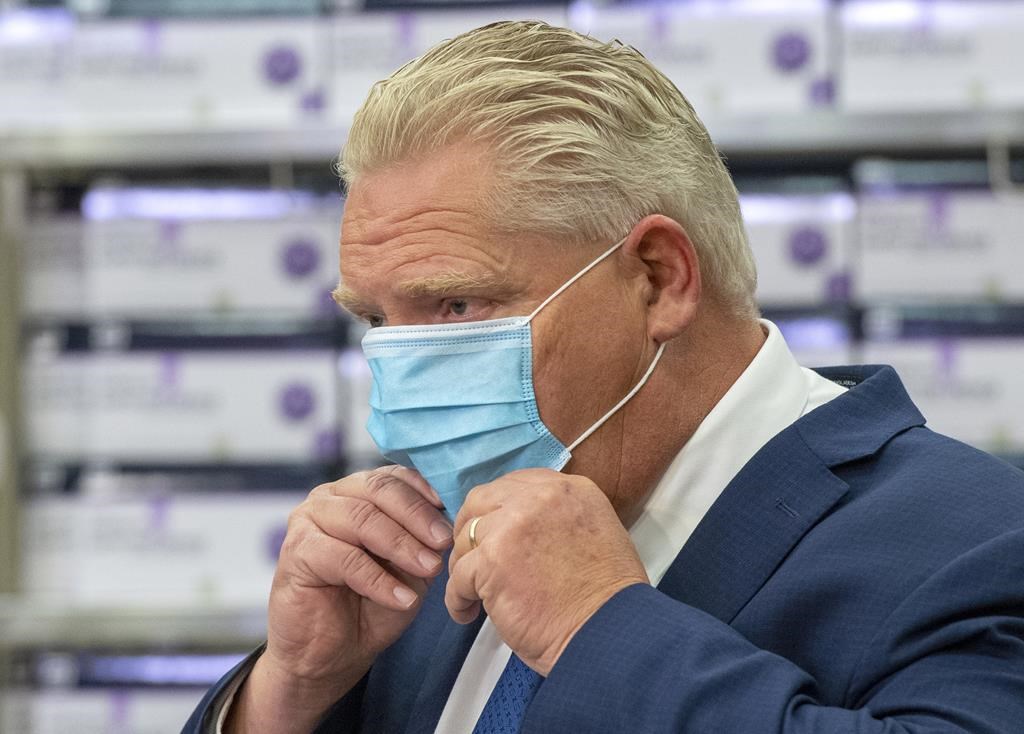
An Ontario-wide curfew is not one of the measures being considered at this time as the Ford government tries to curb the surge in new COVID-19 cases and help an overburdened hospital system, sources tell 680 NEWS.
The measure was discussed at a cabinet meeting Thursday and sources say while it’s currently off the table, things could change as no final decisions have been made.
It’s believed Premier Ford and his cabinet are looking at a host of other measures that could include restrictions to non-essential construction.
No changes to daycare services are expected, according to sources.
Cabinet is expected to meet again on Friday with an announcement expected after new modelling data is released.
Ontario reported a single-day high 4,736 new cases of COVID-19 on Thursday.
Earlier, Associate Medical Officer of Health Dr. Barbara Yaffe called the situation in Ontario “dire” and warned things will not get better unless we change our current behaviour.
“Remember what things were like last spring, when we had the stay-at-home order and what the streets were like, they were pretty much empty. They’re not empty these days. We have to go back to that, we have to think about it the way we did then.”
Solicitor General Sylvia Jones acknowledged the challenges a curfew would present in Ontario, pointing to the anti-curfew protests in Quebec.
“I think the Montreal riots speak to the challenge of both enforcing, and people’s willingness to do a curfew,” she said.
Files from The Canadian Press were used in this report

Toronto Mayor John Tory says High Park will remain open throughout spring this year, even through the much anticipated bloom of the cherry blossoms.
However, Tory says while the park will be open for neighbourhood residents requiring exercise and fresh air — people can walk, run or bike through the park — they are asked not to flock there to see the cherry blossoms.
“The best way to see the cherry blossoms as was the case last year, again this year will be from your own home…on the blossom camera — they city’s most popular live stream,” said Tory.
He said 200,000 people tuned in to the blossom camera last year and people can watch them “24/7 if they want during the peak bloom.”
“We want people to enjoy the blossoms virtually and safely and we still want people to enjoy the park,” he said.
To that end, the city has developed “blossom health protection arrangements” which includes installing fencing around the three largest collections of cherry trees in the park.
City staff will also be on site to “continuously monitor” the area and ensure that crowds do not develop while people still enjoy the rest of the park.
“We will restrict access to only limited areas of the park,” said Tory.
Last year, the park was entirely closed as city officials determined it would not be possible to ensure physical distancing with a partial closure.
Fencing was also installed around the trees last year, but two trespassers got through and one was caught climbing a tree on the blossom cameras.
One of them was found and given three tickets totaling $1,150 for entering into an area of a park posted to prohibit admission, walking where prohibited in a park and using a park between 12:01 a.m. and 5:30 a.m. without a permit.

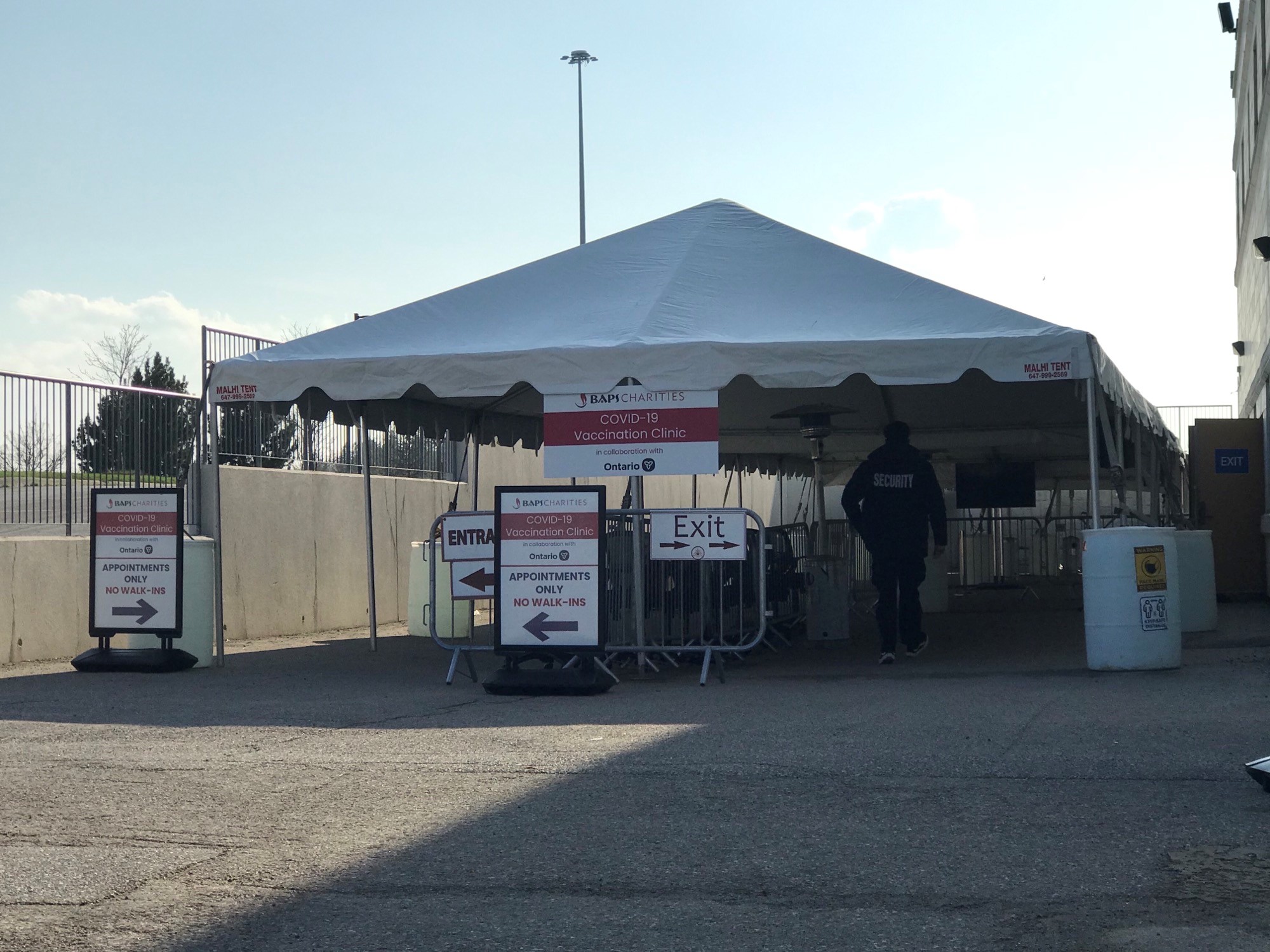
Toronto residents aged 18 years and older living in hotspots will be contacted directly for COVID-19 vaccinations at mobile and pop-up clinics, Fire Chief Matthew Pegg said Wednesday.
The details come after a week of confusion regarding how appointments and registration for this group would take place, following the announcement of their vaccine eligibility on April 7.
Pegg said in general, appointments for mobile or pop-up clinics will not be booked in advance.
“While each specific situation is unique, it is common for these hotspot mobile and pop-up clinics to be operated on a walk-up basis, with eligible adults coming from the very specific location that is being served,” he said.

Pegg went on to explain that residents in a specific building or complex located in a hotspot neighbourhood would be directly notified of an upcoming pop-up clinic in that building or complex along with information on how and when to receive their vaccine.
“Residents don’t travel to a mobile or pop-up vaccine clinic, rather mobile or pop-up clinics come to a specific group of residents in a specifically prioritized hotspot location, as vaccine availability permits,” he said.
On Tuesday, the province’s first pop-up clinic was set up at BAPS Shri Swaminarayan Mandir in the hotspot location of North Etobicoke.
Those 18 and over living in the following postal codes are eligible to get vaccinated at the clinic:
This clinic is not accepting walk-ins and an appointment can be booked via the William Osler booking system.

